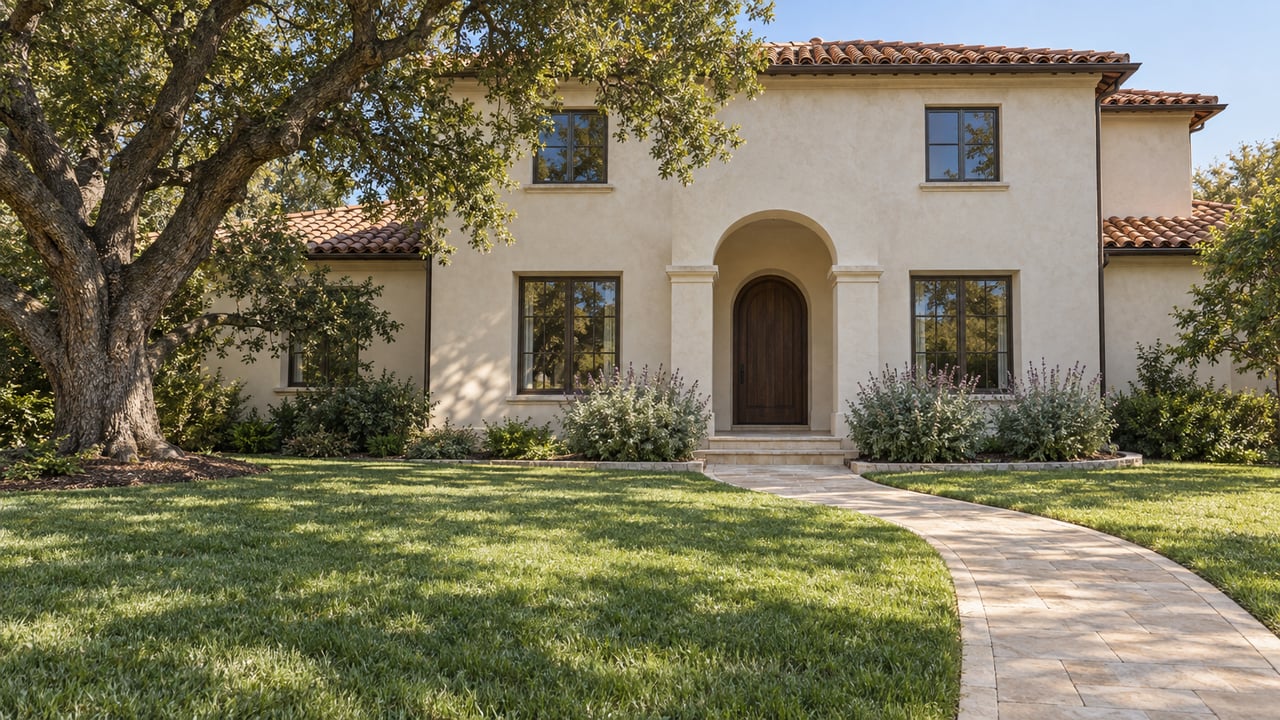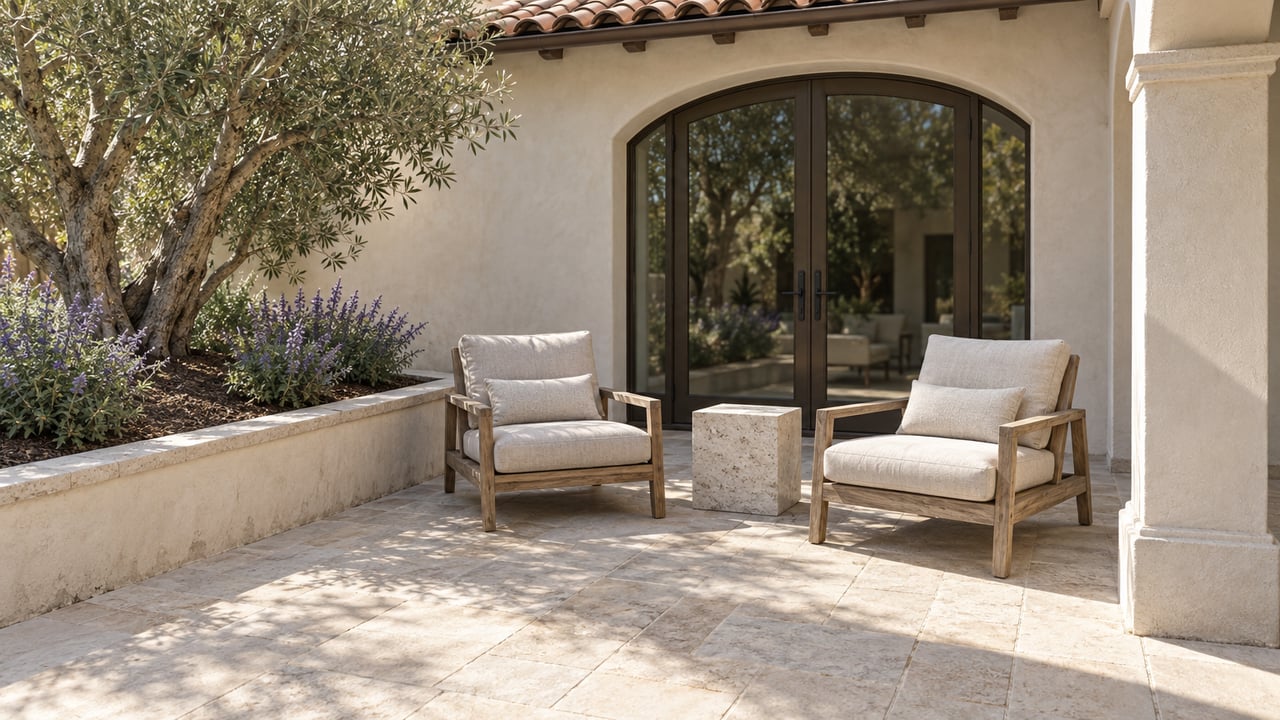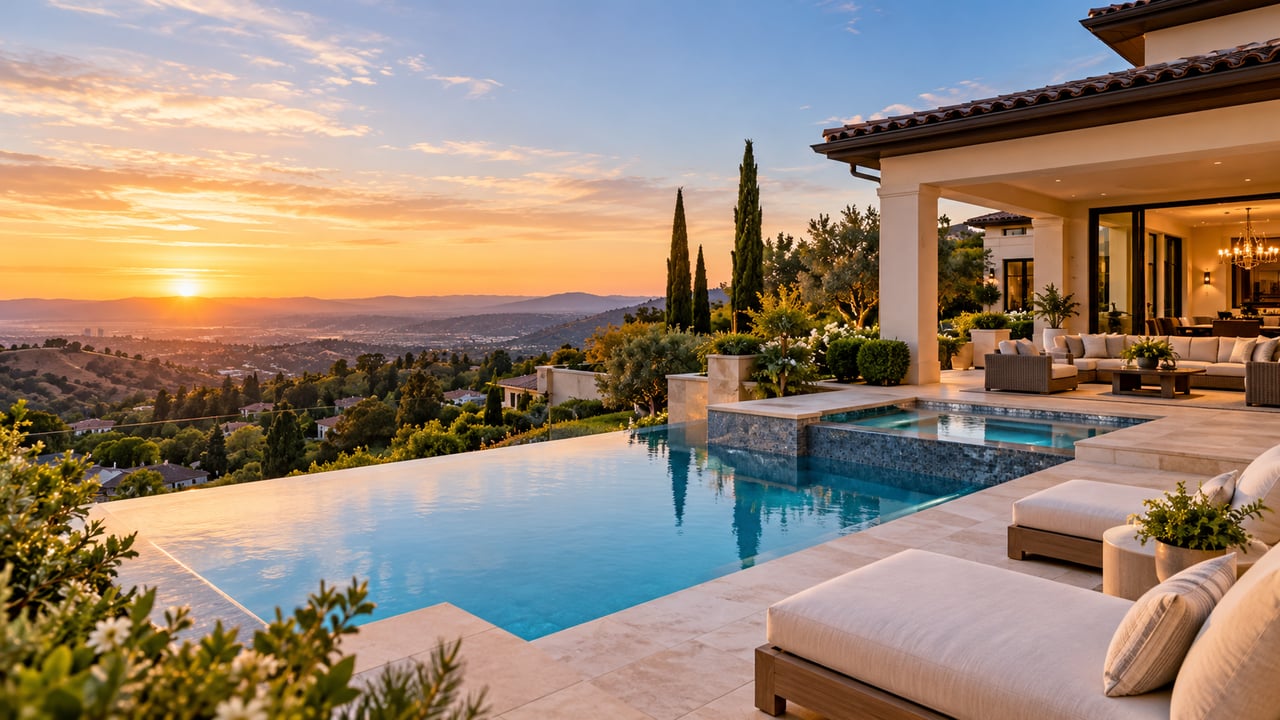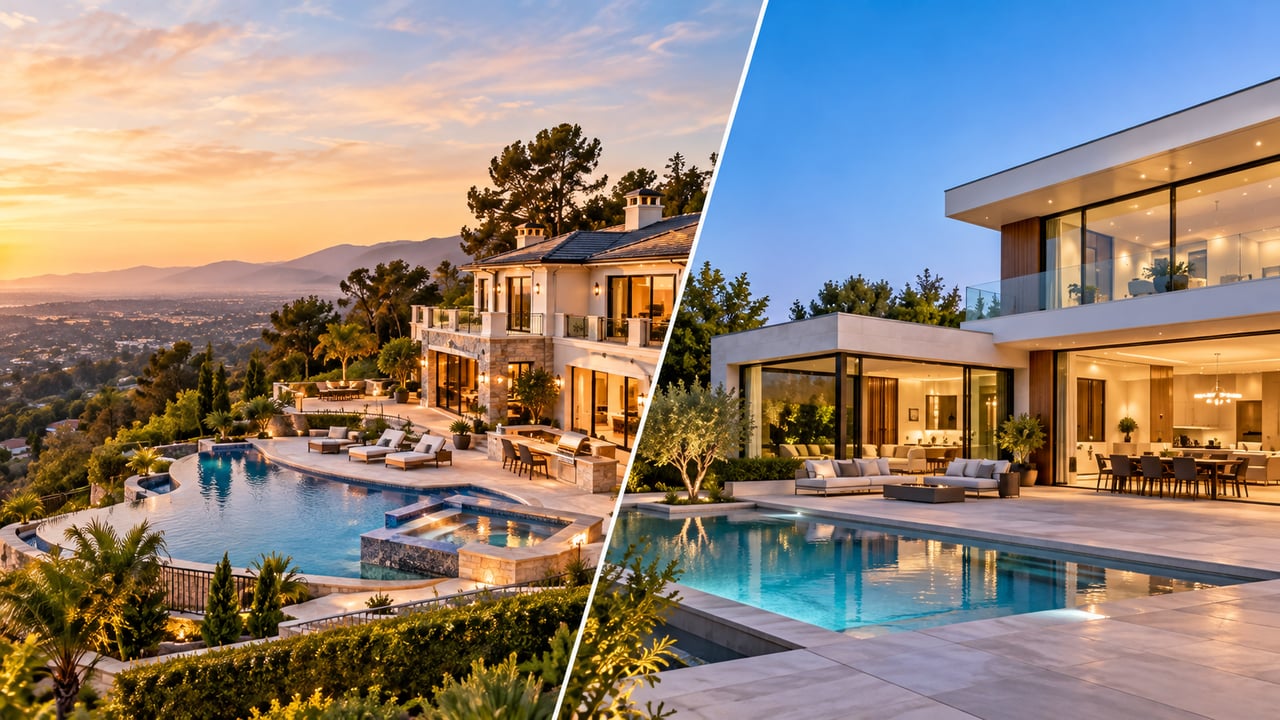
Imagine touring two luxury homes in Southern California. Both are beautifully designed, situated in desirable locations, and offer impressive amenities. One is a sprawling estate with expansive grounds, a resort-style pool, and exceptional privacy. The other is a contemporary residence with an open floor plan, sophisticated technology, and convenient access to shopping, dining, and entertainment.
Both properties may fall within the same price range, but the lifestyles they offer are distinctly different.
For luxury homebuyers, comparing properties is rarely as simple as evaluating square footage, bedroom counts, or architectural finishes. The more important question is how each home supports everyday living, personal preferences, and long-term plans.
Understanding these differences can help buyers make a more thoughtful decision, especially when both properties offer compelling advantages.
Here are seven practical factors to consider when comparing luxury homes that offer different lifestyles.
1. Location: Consider How Each Property Fits Your Daily Routine
Location remains one of the most important considerations in real estate, but its value extends beyond the property's address or neighborhood reputation.
Two luxury homes may be located in equally desirable Southern California communities while offering entirely different experiences.
For example, a hillside estate in Diamond Bar may appeal to buyers who prioritize expansive views, generous lot sizes, and a more secluded residential setting. Meanwhile, a luxury residence in Pasadena or Arcadia may offer convenient access to established commercial districts, restaurants, cultural attractions, and other amenities.
Neither location is automatically the better choice. The distinction lies in how well each supports the buyer's priorities.
Consider your regular commute, frequently visited destinations, proximity to services, and preferred surroundings. A property that feels ideal during a weekend showing may offer a different experience during weekday traffic or daily errands.
It is also worth visiting the surrounding area at different times of day to better understand traffic patterns, noise levels, and neighborhood activity.
The key consideration: Which location makes your preferred daily routine easier and more enjoyable?
2. Floor Plan: Evaluate How the Home Functions, Not Just Its Size
Luxury properties often feature impressive square footage, but a larger home does not necessarily provide a better living experience.
The way interior spaces are arranged can have a greater influence on comfort, convenience, and functionality than the total size of the residence.
One property may feature a traditional floor plan with formal living and dining rooms, private bedroom wings, and separate entertaining spaces. Another may emphasize open-concept living, expansive glass walls, and seamless connections between indoor and outdoor areas.
Both layouts can be desirable depending on how the home will be used.
Buyers who frequently entertain may appreciate generous gathering areas, multiple dining spaces, and easy access to outdoor amenities. Those who prefer separation between activities may find greater value in dedicated offices, private lounges, or distinct living areas.
For larger luxury estates, the placement of bedrooms, staircases, garages, and everyday living spaces also deserves attention.
A property may offer extraordinary architectural features while requiring more movement between frequently used rooms.
Rather than focusing exclusively on the number of rooms, consider how naturally the layout accommodates your routines.
The key consideration: Does the floor plan support how you actually intend to live in the home?
3. Lot Size and Outdoor Space: Compare Usability With Acreage
An expansive lot is often a defining feature of luxury real estate, particularly in communities known for custom estates and hillside properties.
However, lot size alone does not tell buyers how much usable outdoor space a property provides.
A residence situated on a large hillside parcel may offer panoramic views, natural surroundings, and additional separation from neighboring properties. Yet portions of the land may be sloped, landscaped, or otherwise unsuitable for certain outdoor activities.
Another property with a smaller lot may offer a more functional backyard, complete with a pool, covered patio, outdoor kitchen, and landscaped entertaining areas.
When comparing two properties, consider the relationship between total acreage and the outdoor spaces you can realistically enjoy.
The orientation of the home, terrain, landscaping, drainage, and accessibility of outdoor areas can all influence usability.
Buyers should also consider whether they prefer established landscaping and finished outdoor amenities or a property that offers opportunities for future customization.
For homes with significant hillside terrain or planned improvements, reviewing relevant site conditions and consulting qualified professionals can provide additional clarity.
The key consideration: Does the property offer the type of outdoor environment you want, rather than simply more land?
4. Privacy: Understand What Creates a Sense of Seclusion
Privacy can be a major consideration in luxury homeownership, but it takes different forms.
Some properties achieve privacy through expansive acreage, mature landscaping, and distance from neighboring residences. Others rely on thoughtful architectural design, gated entrances, perimeter walls, or strategic positioning of windows and outdoor living spaces.
A home within a guard-gated community may offer controlled community access, while an independently gated estate may provide a different level of separation from the surrounding area.
These features should be evaluated individually rather than treated as interchangeable.
Buyers should consider visibility from neighboring homes, nearby roads, shared boundaries, and the positioning of outdoor entertaining areas.
For example, a property with dramatic panoramic views may feature extensive glass walls that create an open atmosphere. Another residence may prioritize enclosed courtyards and secluded gardens.
Each design creates a different relationship between openness and privacy.
When touring, spend time in the primary bedroom, living areas, balconies, and backyard to understand how exposed or secluded each space feels.
The key consideration: Which property provides the level and type of privacy that aligns with your preferences?
5. Amenities: Distinguish Impressive Features From Everyday Value
Luxury homes may include a wide range of amenities, from private theaters and wine cellars to fitness rooms, guest suites, swimming pools, and sophisticated smart-home systems.
While these features can enhance a property's appeal, their value depends on how frequently and meaningfully they will be used.
Consider two similarly priced estates.
The first features a resort-style backyard with a pool, spa, outdoor kitchen, and extensive entertaining areas. The second offers a private gym, home theater, multiple offices, and integrated home automation.
Both properties may be exceptionally appointed, but their amenities serve different priorities.
Buyers who regularly host gatherings may place greater value on outdoor entertaining spaces. Those who work remotely or prioritize at-home recreation may prefer dedicated offices and indoor amenities.
It is also important to evaluate the condition and functionality of these features.
An elaborate amenity that requires significant upgrades or specialized maintenance may not provide the same practical value as a simpler feature that is already well suited to the buyer's needs.
Instead of comparing which home has more amenities, focus on which amenities contribute most to the desired lifestyle.
The key consideration: Which features will genuinely improve your everyday living experience?
6. Maintenance: Understand the Responsibilities Behind the Lifestyle
The ownership experience of a luxury property extends well beyond the initial purchase.
Larger residences, extensive grounds, specialized systems, and elaborate amenities can introduce additional maintenance responsibilities and operating expenses.
For example, a sprawling estate with mature landscaping, multiple outdoor entertaining areas, and a large swimming pool may require regular landscape services, pool maintenance, irrigation management, and periodic exterior upkeep.
A contemporary residence with extensive glass, advanced home automation, or specialized mechanical systems may have a different set of servicing and replacement needs.
Neither property type is necessarily more expensive to maintain in every situation.
The important distinction is understanding what ongoing ownership will involve.
When comparing homes, buyers should review available information about the age and condition of major systems, recent repairs, service records, and anticipated maintenance requirements.
Property inspections can also help identify conditions that may require attention.
For homes within homeowners associations, buyers should review applicable fees, governing documents, and the services or amenities provided.
A realistic comparison should account for both financial costs and the time or coordination required to maintain the property.
The key consideration: Are the property's ongoing responsibilities consistent with the ownership experience you want?
7. Long-Term Priorities: Think Beyond Your Current Preferences
A luxury home purchase often involves more than meeting immediate needs.
Buyers may intend to remain in a property for many years, making it important to consider how their priorities could evolve.
A residence that feels ideal today may become less convenient if work arrangements change, accessibility needs develop, or preferences for entertaining and outdoor activities shift.
For example, a multilevel estate may offer extraordinary views and architectural character, while a predominantly single-story residence may provide easier access between living spaces.
Similarly, a property with several dedicated guest suites may be especially useful for buyers who frequently host visitors, while another home may offer greater flexibility for future office, recreation, or hobby spaces.
Buyers should also consider the potential for modifications.
Depending on local regulations, site conditions, community restrictions, and the property's design, some homes may offer more flexibility for future improvements than others.
Long-term considerations may also include the property's architectural versatility, maintenance demands, and appeal within its particular market segment.
Although future resale performance cannot be guaranteed, understanding a property's characteristics and local market context can help buyers assess its long-term suitability.
The key consideration: Which home is more likely to accommodate your priorities as they evolve?
A Practical Framework for Comparing Two Luxury Homes
When both properties offer compelling advantages, organizing your priorities can make the decision clearer.
Rather than relying entirely on first impressions, consider comparing each property across three categories.
Essential Priorities
These are the features that have the greatest influence on your daily life and are difficult or costly to change.
Examples may include location, commute, overall floor plan, accessibility, lot configuration, and the level of privacy.
A property that does not meet these requirements may be less suitable, even if it offers impressive finishes or amenities.
Lifestyle Preferences
These are the features that enhance enjoyment but may allow greater flexibility.
Examples include outdoor entertaining areas, swimming pools, home theaters, fitness rooms, guest accommodations, and architectural style.
Consider how often you expect to use each feature and whether it meaningfully improves your experience.
Long-Term Ownership Considerations
These factors influence the practical and financial responsibilities of owning the property.
They may include maintenance requirements, property condition, future improvements, operating expenses, and the flexibility of the home as your needs change.
Evaluating these considerations separately can help prevent a particularly attractive feature from overshadowing more important requirements.
Luxury Home Comparison Checklist
Use this simple comparison table to organize your observations after touring two properties.
Category | Home A | Home B |
|---|---|---|
Location | Daily convenience and surroundings | Daily convenience and surroundings |
Floor Plan | Layout, flow, and functionality | Layout, flow, and functionality |
Lot and Outdoor Space | Usable land and outdoor amenities | Usable land and outdoor amenities |
Privacy | Visibility, separation, and access | Visibility, separation, and access |
Amenities | Features you will regularly use | Features you will regularly use |
Maintenance | Expected upkeep and operating needs | Expected upkeep and operating needs |
Long-Term Fit | Flexibility for future priorities | Flexibility for future priorities |
After completing the comparison, identify which categories matter most to you.
A useful approach is to assign each category an importance rating from one to five, then evaluate how well each property satisfies that priority.
This does not need to produce a mathematically perfect answer. Its purpose is to make trade-offs easier to recognize and discuss.
For example, one home may perform better in location and convenience, while another offers greater privacy and outdoor space.
Understanding which advantages matter most can make the final decision more straightforward.
Why the Most Expensive or Largest Home Is Not Always the Best Fit
Luxury buyers sometimes encounter properties that are difficult to compare because their strengths are fundamentally different.
A larger estate may offer more acreage, greater separation from neighboring residences, and extensive entertaining facilities. A smaller contemporary property may provide a more efficient layout, convenient location, and lower maintenance demands.
The larger home may have more physical features, but that does not automatically make it the better purchase for every buyer.
Likewise, a newly constructed residence may offer modern systems and finishes, while an established custom estate may provide distinctive architecture, mature landscaping, or a location that is difficult to replicate.
The strongest choice is not necessarily the property with the longest list of amenities or the highest asking price.
It is the property whose advantages most closely align with the buyer's priorities, expectations, and intended ownership experience.
Final Thoughts
Comparing two luxury homes requires looking beyond the features that initially capture your attention.
Location, floor plan, usable outdoor space, privacy, amenities, maintenance, and long-term flexibility all contribute to the lifestyle a property offers.
By evaluating these factors individually, buyers can better understand the trade-offs between different homes and recognize which features will have the greatest impact on their daily lives.
In Southern California's diverse luxury real estate market, there is no single definition of the ideal home. A secluded hillside estate, an elegant traditional residence, and a contemporary architectural property can each offer exceptional value to the right buyer.
At Country Queen Real Estate, we help buyers explore these differences with a thoughtful understanding of Southern California's luxury property market. Our goal is to provide the information, local insight, and personalized guidance that support confident, well-informed decisions.
Whether you're exploring luxury homes in Diamond Bar, Arcadia, Pasadena, or surrounding communities, finding the right property begins with understanding the lifestyle you want to create.