Trying to choose between Chino Hills communities can feel like apples-to-oranges. One area promises hilltop views and private amenities, while another puts grocery, coffee, and school drop-off five minutes from your door. You want the right blend of parks, shopping, commute access, and HOA fit without second-guessing later. In this guide, you’ll learn how Chino Hills neighborhoods differ, what to check in person, and a simple way to score options so you can move forward with confidence. Let’s dive in.
How Chino Hills communities differ
Chino Hills sits on the western edge of San Bernardino County, next to Orange and Los Angeles counties. You’ll see a few common neighborhood types when you start touring:
- Gated, golf or country club communities with extensive amenities (HOAs are common). A prominent example is Vellano, known for its gated entry, hilltop terrain, views, and private golf club environment.
- Mid-density suburban master plans built around local parks, community pools, and nearby elementary schools.
- Canyon and edge neighborhoods near open space with larger lots and fewer shared facilities.
- Homes near the city’s main retail core and mixed-use nodes that prioritize quick access to shops and dining.
Regional amenities shape day-to-day life across the city. Chino Hills State Park offers miles of hiking and biking with ridge views. Carbon Canyon Regional Park brings a rare redwood grove, a pond, and picnic areas. The Shoppes at central Chino Hills anchors daily needs, dining, and services. Public schools are served by Chino Valley Unified School District. Always verify specific school assignments directly with the district.
Parks and open space access
If trail time is a priority, you’ll want to look closely at proximity to Chino Hills State Park. Some neighborhoods border trailheads, while others require a short drive. Carbon Canyon Regional Park also provides playgrounds, fishing, and shaded walks in addition to its unique redwood grove. Hilltop communities may add golf-course vistas and quick access to ridgeline routes.
Practical checks:
- Is a trailhead within a comfortable walk, or is it a drive-and-park routine?
- Are trailheads gated, seasonal, or permit-based? Confirm hours and parking rules.
- If the neighborhood is gated, are there HOA restrictions on trail access or guest parking near trailheads?
Everyday conveniences and retail
Daily life often comes down to how quickly you can reach groceries, pharmacies, coffee, banking, and gyms. Many communities are planned so that you drive a few minutes to a retail node, with The Shoppes serving as the city’s primary dining and shopping hub. Some master plans place smaller convenience centers just outside the neighborhood, while canyon and edge areas may trade retail proximity for privacy and scenery.
What to evaluate on-site:
- Driving time to your preferred grocery and pharmacy during peak hours.
- Pedestrian safety and crossings if you plan to walk to shops or parks.
- Weekend parking and traffic flow around major shopping centers.
- Delivery access for gated entries and how guests navigate parking.
Community amenities and HOAs
Amenities can range from pools, courts, and clubhouses to gated security, private golf, and landscape maintenance. Many master-planned neighborhoods have a mandatory HOA. Some communities include multiple layers (a master HOA plus sub-associations), each with its own fees and architectural rules.
Buyer implications:
- Amenity-rich communities often carry higher monthly or quarterly fees but can reduce personal upkeep.
- Review CC&Rs for rental policies, exterior modification approvals, pet rules, and parking.
- Ask about special assessments, reserve studies, and recent capital projects.
- For gated communities, confirm guest access procedures and vendor deliveries.
Checklist to request from the HOA or listing agent:
- Fee schedule and what it covers (landscaping, private roads, gates, clubhouse, pools)
- CC&Rs and architectural guidelines
- Rental restrictions and any short-term rental rules
- Reserve study and recent meeting minutes
- Insurance coverage details and responsibility boundaries
Schools and family features
Many suburban buyers focus on walk routes to elementary and middle schools, nearby parks with playgrounds, and city recreation programming. Chino Hills is served by Chino Valley Unified School District, and assignments can change over time as boundaries are updated.
What to verify:
- Current school boundaries and transportation options for the specific property.
- Distance and walking paths to schools and parks.
- Availability of community pools, youth sports fields, and after-school programs.
Use neutral, objective checks when comparing school options. Always confirm boundaries and offerings directly with the district before you make a final decision.
Commute and mobility
Chino Hills offers several regional connections for work trips into Orange County, Los Angeles County, and the Inland Empire. Most residents drive, with limited in-city public transit compared to more urban cores.
Key corridors and options:
- Freeways and arterials: SR-71, SR-91, and SR-60 connect to major job centers.
- Transit: express buses and park-and-ride are available in the greater area; many residents drive to nearby Metrolink stations in adjacent cities.
- Airports: Ontario International and John Wayne/Orange County are the most common choices for regional flights depending on where you live within the city.
Pro tips:
- Test your door-to-door drive times during peak AM and PM hours to your primary job center (Irvine, Anaheim, Santa Ana, downtown Los Angeles, or Ontario).
- Note bottlenecks near freeway interchanges and major arterials. A one-mile difference can change peak-hour travel.
Safety and long-term outlook
Hillside and edge locations near open space can bring wildfire exposure and defensible-space requirements. Review local hazard maps and talk with the fire department about brush clearance and home hardening. For day-to-day safety trends, check Chino Hills Police Department resources and San Bernardino County public safety reports.
Also ask your agent about upcoming road work, school construction, or new retail that could change traffic patterns or add convenience.
Comparison template you can use
Below is a simple template you can copy to compare the neighborhoods on your shortlist. Bring it on tours and fill in details from site visits, HOA packets, and district maps.
| Community | Type | HOA (Y/N) | Parks & Trails | Amenities | Retail Access | Schools (verify) | Commute Notes | Environmental Notes |
|---|---|---|---|---|---|---|---|---|
| Nearest trailhead and distance | Pool/club/golf | Nearest grocery and drive time | Assigned schools | Nearest freeway and peak drive time | Wildfire/terrain notes | |||
Tip: keep a separate sheet for HOA fee summaries, CC&Rs, and any rental restrictions that may affect your plans.
Scoring rubric for fast shortlists
Score each neighborhood 0–10 on the criteria below, then apply the weights to create your ranked shortlist.
- Parks and trails: 20%
- Everyday conveniences and walkability: 20%
- Commute time to your primary job center: 25%
- Schools and family features: 15%
- HOA cost and rules: 10%
- Safety and environmental risk: 10%
Example: If “Commute to Irvine” is your top priority, you can bump that weight higher and reduce others to fit your needs.
Neighborhood spotlights to orient your search
Vellano (gated hilltop living)
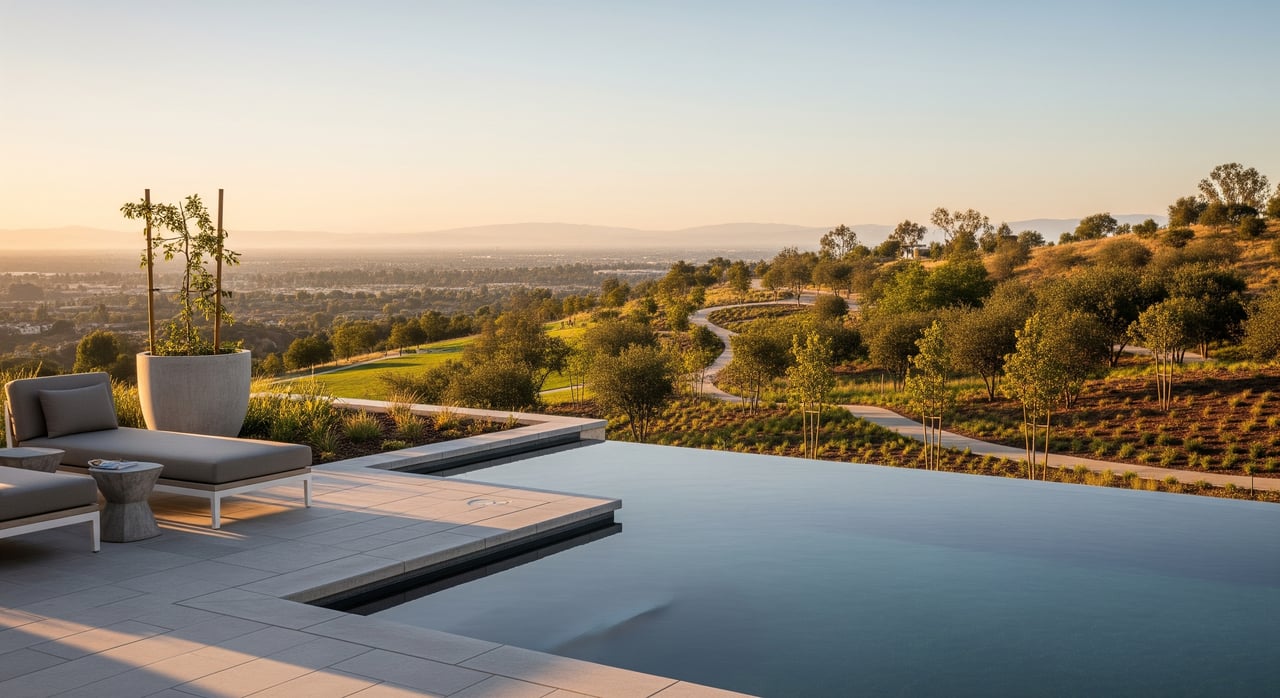
If you value privacy, views, and a private golf club setting, Vellano is a marquee gated community to consider. Expect a country-club environment with controlled access and HOA governance. Verify current HOA fees, services covered, and any architectural or rental rules before you commit.
Best for buyers who want: a luxury feel, scenic hilltop terrain, and a private-club lifestyle. Confirm commute expectations during peak hours due to hillside access roads.
Central suburban master plans
Many mid-density master-planned areas in Chino Hills are designed around pocket parks, community pools, and proximity to elementary schools. These neighborhoods can offer a balanced lifestyle with quick drives to The Shoppes and essential services. HOAs are common, and amenities can reduce personal upkeep.
Best for buyers who want: family-friendly features, short drives to retail, and a community feel with planned parks and recreation.
Canyon and edge neighborhoods
On the city’s edges near preserved open space, you may find larger lots, quiet streets, and fast access to trails. Shared amenities are fewer, and HOAs may be minimal or nonexistent. These areas can feel more private, with a stronger connection to Chino Hills State Park.
Best for buyers who want: space, trail access, and a natural setting. Verify wildfire mitigation requirements, insurance considerations, and drive times to retail.
Shortlist and tour plan
Use this simple workflow to reduce overwhelm and stay focused:
- Choose your top three priorities. Examples: walkable retail, short commute to Irvine, or access to community pools.
- Eliminate any neighborhoods that fail a deal-breaker. Examples: commute consistently over your limit at peak hours, or HOA rules that conflict with your plans.
- Narrow to 4–6 communities and schedule site visits. Go on a weekday morning and evening to compare traffic and parking, then visit on a weekend to assess retail activity and park use.
- Before writing an offer, collect HOA documents and current school boundary maps for the specific property. Confirm any rental or exterior modification rules in writing.
Plan with confidence
Choosing the right Chino Hills community is about matching your daily routine with a neighborhood’s parks, amenities, shopping, and commute. Use the template, scoring rubric, and on-site checks in this guide to quickly filter options and line up the best-fit homes for tours. If you want local, boutique guidance and access to private opportunities, our team is ready to help you compare, verify, and negotiate with confidence.
Ready to get started? Connect with Country Queen Real Estate for a personalized plan and neighborhood tours.
FAQs
How do Chino Hills communities differ by amenities?
- Gated golf and country-club areas emphasize private facilities and HOA services, suburban master plans focus on parks and pools, and canyon edges trade shared amenities for larger lots and open-space access.
What should I check for parks and trails access?
- Confirm walking distance to trailheads, parking and permit rules, seasonal gate hours, and any HOA restrictions on parking or access near trails.
How do I compare commute times to Orange County?
- Test door-to-door drives during peak hours using SR-71, SR-91, or SR-60 routes, and repeat on multiple days to account for typical corridor congestion.
What do HOAs typically cover in master-planned areas?
- Common items include landscaping of shared spaces, private road maintenance, gate systems, and use of amenities like pools and clubhouses; verify fees, CC&Rs, and reserve studies.
How should I evaluate school considerations?
- Check current Chino Valley Unified School District boundary maps for the specific property, confirm transportation options, and note proximity and safe walking routes to nearby schools.
Are there wildfire considerations for hilltop neighborhoods?
- Yes. Review local hazard maps, confirm defensible-space requirements and brush clearance, and discuss insurance factors related to hillside and open-space adjacency.